Screen Printing 101: An Updated Guide to Better Custom Apparel
When you’re ordering custom apparel, the goal isn’t simply to put a logo on a shirt.
You want the finished product to look professional, represent your brand accurately, arrive when you need it, and hold up after repeated wear.
That’s why screen printing continues to be one of the most popular decoration methods for company apparel, event shirts, school merchandise, team uniforms, fundraisers, and branded merchandise programs.
Screen printing can produce vibrant, consistent, and long-lasting results across a large order. However, the best results depend on choosing the right garment, preparing the artwork correctly, and planning the project before production begins.
Here’s what you should know before placing your next screen-printed apparel order.
What Is Screen Printing?
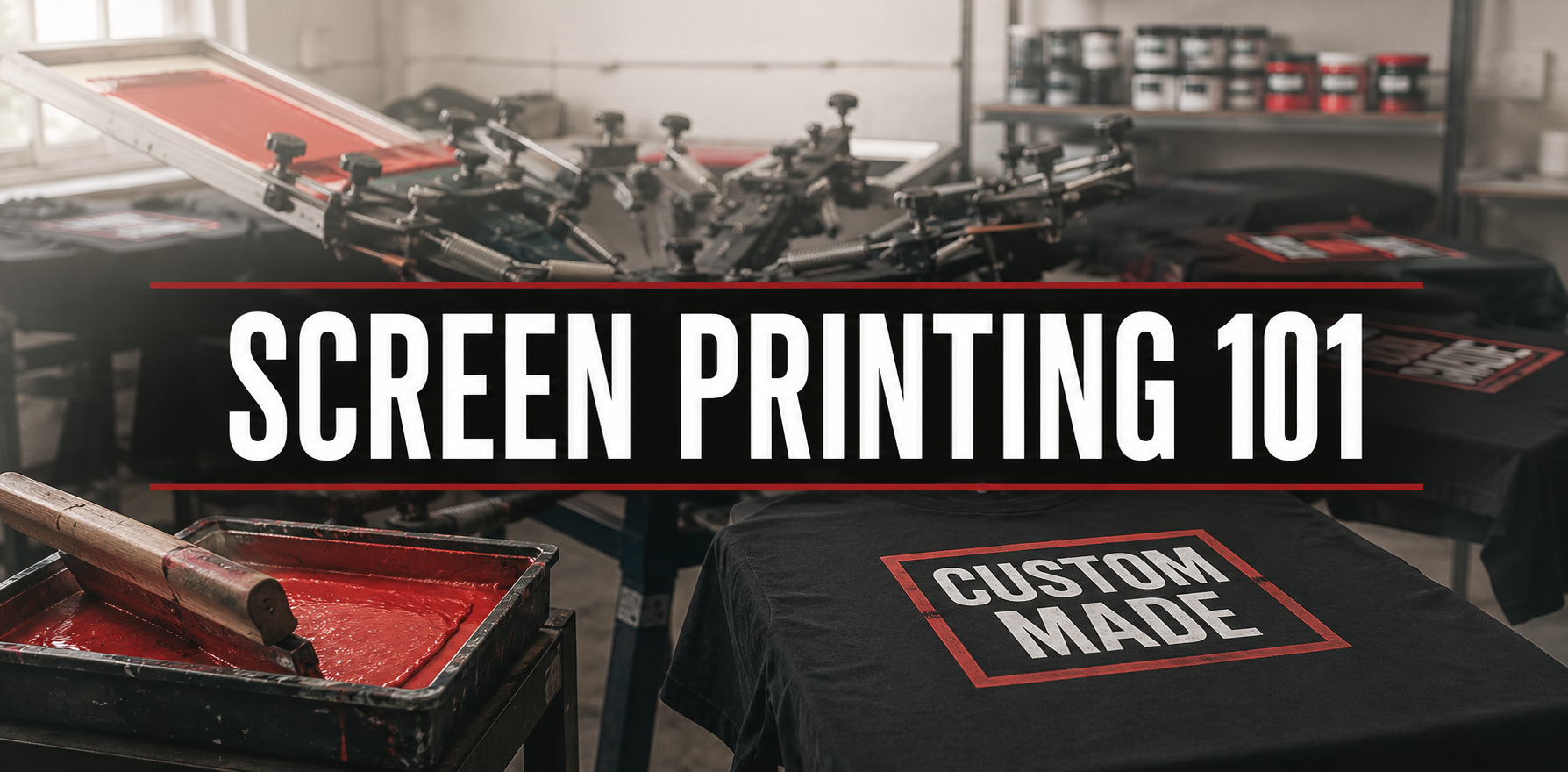
Screen printing is a decoration method that uses mesh screens and ink to transfer a design onto a garment or other printable surface.
A stencil is created for each color in the artwork. Ink is then pushed through the open areas of the screen and onto the product beneath it.
Each color is printed separately, which means a four-color design generally requires four individual screens. The garment then passes through a dryer, where controlled heat cures the ink so the finished print can withstand regular wear and washing.
Although the basic concept is straightforward, producing a clean and consistent result requires accurate artwork preparation, careful registration, proper ink selection, and close quality control throughout the production run.
How the Screen Printing Process Works
Every project is different, but most screen-printed apparel orders follow the same general process.
1. Garment and Product Selection
The garment should be selected before the artwork is finalized.
Fabric composition, garment color, texture, fit, and intended use can all affect how the design should be printed.
A lightweight performance shirt may require a different approach than a heavyweight cotton T-shirt or sweatshirt.
2. Artwork Preparation
The artwork is reviewed to confirm its size, colors, print location, and overall printability.
Depending on the design, adjustments may be needed to improve small text, thin lines, gradients, or other fine details.
Each color is then separated so an individual screen can be created for it.
3. Screen Creation
A mesh screen is coated with a light-sensitive material and exposed using the prepared artwork.
The exposure process creates a stencil in the screen. Areas of the stencil remain open where the ink needs to pass through.
A separate screen is prepared for every color and print location.
4. Press Setup and Registration
The screens are installed on the printing press and carefully aligned.
This alignment process is known as registration. Accurate registration ensures that the individual colors line up correctly to create the complete design.
5. Test Printing
Before the full production run begins, test prints are completed to evaluate:
- Artwork placement
- Color accuracy
- Ink coverage
- Registration
- Fine details
- Overall appearance
Adjustments can be made before printing the full order.
6. Printing and Curing
Once everything is approved and properly aligned, production begins.
Each garment moves through the press as the individual colors are printed. The garment then passes through a conveyor dryer at a controlled temperature.
Proper curing is essential. If the ink isn’t cured correctly, the print may crack, wash out, or fail prematurely.
7. Quality Control
Throughout production, the printing team monitors placement, color, ink coverage, and consistency.
Finished garments should also be checked for printing defects, product issues, and order accuracy before they’re packed and delivered.
Why Screen Printing Works So Well
Screen printing has remained a trusted decoration method because it combines durability, consistency, flexibility, and value.
Durable Results
A properly printed and cured design can hold up through repeated wear and washing.
This makes screen printing a strong option for employee shirts, uniforms, event merchandise, spirit wear, and other apparel intended for regular use.
Consistency Across Large Orders
Once the press is set up, the same artwork, colors, and placement can be reproduced across every garment.
That consistency is especially important for organizations ordering apparel for multiple employees, departments, teams, or locations.
Strong, Vibrant Colors
Screen-printing inks can create bold color coverage, including on dark garments.
When a design requires a white or light-colored print on a dark shirt, an underbase can be added to help the colors remain bright and accurate.
Better Value at Higher Quantities
Screen printing requires setup before production begins. However, once the screens and press are ready, larger quantities can be produced efficiently.
As order quantities increase, the setup cost is distributed across more garments, which can reduce the price per piece.
Which Products Work Best for Screen Printing?
Screen printing is most commonly associated with T-shirts, but it can be used on a wider range of apparel and fabric products.
Popular options include:
- Short-sleeve T-shirts
- Long-sleeve T-shirts
- Sweatshirts
- Hoodies
- Crewnecks
- Tank tops
- Performance shirts
- Work shirts
- Safety and high-visibility apparel
- Tote bags
- Aprons
- Team and event apparel
The best product depends on who will wear it, where it will be used, how often it will be worn, and what type of print the design requires.
The Garment Affects the Final Print
Two garments may look similar in a catalog but produce different printing results.
Important factors include:
- Fabric composition
- Garment color
- Fabric weight
- Surface texture
- Stretch
- Moisture-wicking treatments
- Dye stability
- Seams, pockets, and zippers
Cotton and many cotton-polyester blends are popular choices because they generally provide a smooth, reliable printing surface.
Performance fabrics, highly stretchy materials, and certain polyester garments may require specialized inks or production techniques. Some polyester dyes can migrate into the printed ink during curing, which can change the appearance of light-colored artwork.
Choosing the garment and decoration method together can prevent these issues before production begins.
Artwork Quality Matters
A design that looks good on a computer screen may not automatically be ready for screen printing.
Whenever possible, provide vector artwork such as an AI, EPS, or editable PDF file. Vector files allow the design to be resized without losing sharpness.
If vector artwork isn’t available, a high-resolution image may work depending on the design.
Artwork may require adjustment when it contains:
- Very small text
- Extremely thin lines
- Low-resolution images
- Complex gradients
- Photographic details
- Multiple overlapping colors
- Effects designed for digital screens
- Colors that don’t translate directly to ink
These adjustments don’t necessarily mean changing the design. The goal is to prepare it so the printed version remains clear, recognizable, and consistent with your brand.
Understand How Colors Affect the Project
Because each ink color generally requires its own screen, the number of colors in your artwork can affect setup, production time, and pricing.
A simple one- or two-color design is often the most cost-effective option for a larger apparel order.
More complex designs can still be screen printed, but they may require:
- Additional screens
- More setup time
- Precise color registration
- Halftones
- An underbase on dark garments
- Specialty ink or production techniques
If your organization uses specific brand colors, provide Pantone color information whenever possible. This gives the production team a clearer target for matching the printed ink to your brand standards.
Keep in mind that the garment color can also influence how the finished ink appears.
Print Locations Matter Too
A small left-chest print, full front design, full back design, and sleeve print are treated as separate print locations.
Each location may require its own screens and press setup.
Common locations include:
- Full front
- Full back
- Left chest
- Right chest
- Upper back
- Sleeves
- Lower hem
Before production, confirm the size and placement of every decoration.
Adding multiple locations can create a more customized garment, but it can also increase production requirements and cost.
When Screen Printing Is the Best Choice
Screen printing is often a strong option when you need:
- Medium or large quantities
- Consistent branding across every garment
- Bold and vibrant colors
- Long-lasting decoration
- Event or staff apparel
- Spirit wear or fundraising merchandise
- Company-wide apparel programs
- Repeatable designs without individual personalization
It’s particularly effective when the same artwork is being printed in the same location across the entire order.
When Another Decoration Method May Work Better
Screen printing isn’t automatically the right choice for every project.
A heat-transfer or digital decoration method may be better for:
- Very small quantities
- Individual names or numbers
- Highly detailed, full-color artwork
- Frequent design changes
- Personalized garments
- Projects without enough quantity to justify screen setup
Embroidery may be more appropriate for:
- Polos
- Hats
- Jackets
- Quarter-zips
- Professional uniforms
- Designs that benefit from a textured, dimensional appearance
The right decoration method depends on the artwork, product, quantity, budget, and intended use.
How to Plan a Smooth Screen-Printing Order
Most production problems can be prevented with clear information and early planning.
Before requesting a quote, try to determine:
- Your required delivery date
- The total quantity
- Garment styles and colors
- Size breakdown
- Artwork and brand colors
- Print locations
- Number of ink colors
- Shipping or distribution requirements
- Whether additional inventory may be needed later
Product availability, artwork approval, multiple print locations, specialty inks, and large quantities can all affect the schedule.
Starting early gives you more product options and more time to review samples, approve artwork, and make changes without creating unnecessary rush costs.
How to Help Screen-Printed Apparel Last
A properly produced screen print is designed to withstand regular use, but appropriate garment care can help extend its life.
For best results:
- Follow the garment’s care instructions
- Wash garments inside out
- Use cold or moderate water temperatures
- Avoid harsh bleach when possible
- Don’t iron directly over the printed design
- Avoid excessive dryer heat
The fabric and ink system may have different care requirements, so always follow any instructions provided with the finished order.
Work With an Experienced Printing Partner
Screen printing involves much more than placing ink on a shirt.
A reliable partner should help you evaluate the garment, artwork, colors, quantity, print locations, timeline, and intended use before production begins.
At Marked Promo, our in-house screen-printing capabilities give us direct control over artwork setup, production scheduling, print quality, and final inspection.
That means we can identify potential problems early, maintain consistency throughout the order, and help ensure your apparel arrives on-brand and on time.
The Bottom Line
Screen printing remains one of the most reliable ways to produce durable, consistent, and professional custom apparel.
The best results begin with the right garment and properly prepared artwork. From there, accurate color planning, careful setup, proper curing, and quality control help turn a design into apparel people will actually want to wear.
Planning a screen-printed apparel order? Marked Promo can help you choose the right garments, prepare your artwork, and create a finished product that represents your brand well. Request a quote here.