The Promotional Product Planning Checklist: From Goal to Giveaway
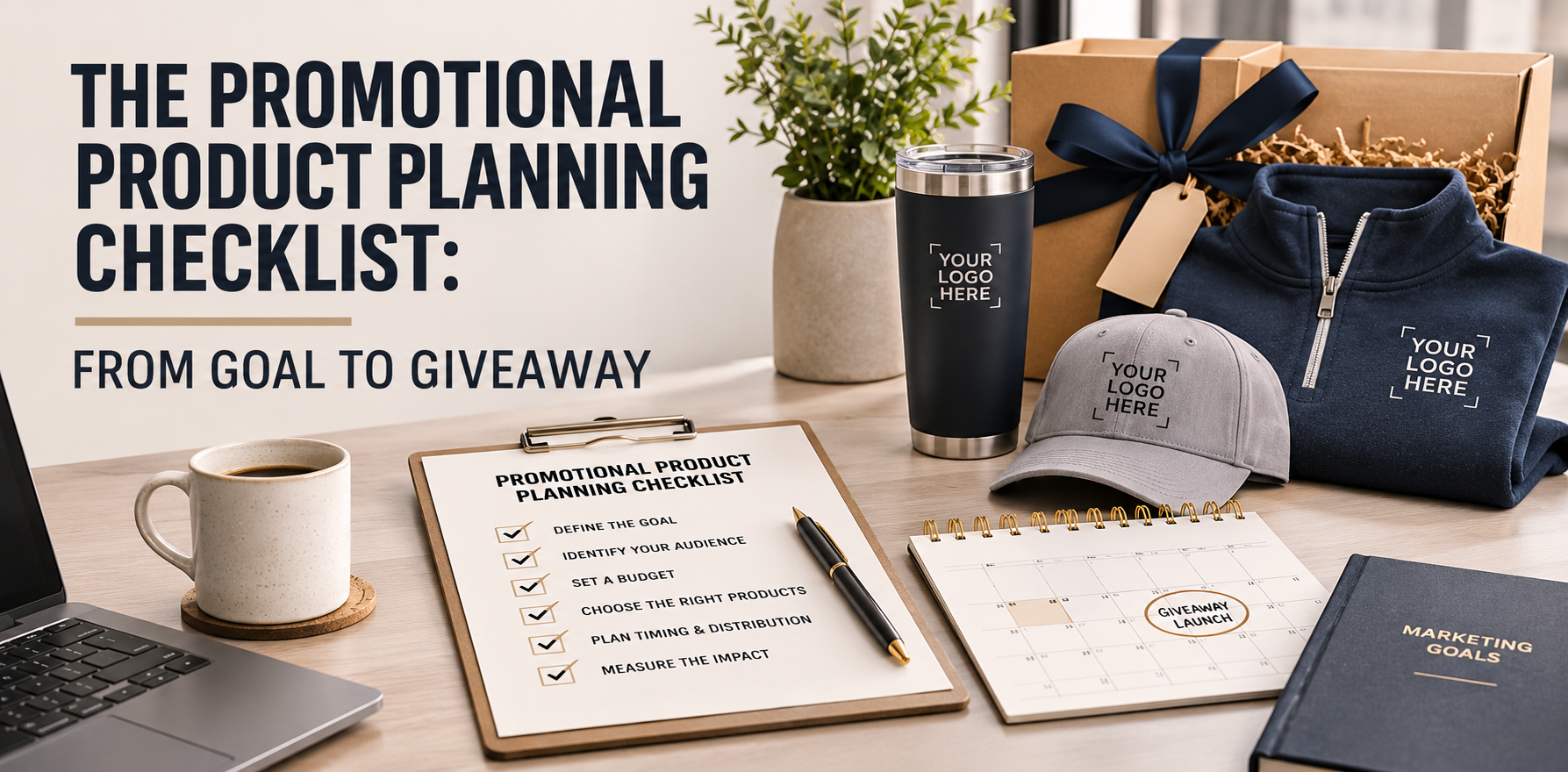
A successful promotional product begins long before a logo is placed on an item. The best programs connect the audience, purpose, product, design, timeline, and distribution plan.
Whether you are preparing for an event, onboarding employees, launching a campaign, or thanking customers, this checklist can help turn an idea into a product people will actually use.
1. Define the goal
Start with the result the product should support. A trade show giveaway may need to attract booth traffic and start conversations. An employee item may reinforce belonging. A client gift may express appreciation, while a direct-mail piece may encourage a specific next step.
Write one clear goal and use it to evaluate every later decision.
2. Understand the audience
Consider who will receive the product and how it fits into their routine. Think about work environment, location, age range, interests, travel habits, and common needs without relying on stereotypes.
Ask:
- Will the item be used at work, home, or on the go?
- Does the audience already receive many similar products?
- Are size, accessibility, or dietary choices involved?
- Will the product be distributed in person or shipped?
- What would make the item worth keeping?
3. Set the full budget
The product cost is only one part of the budget. Include decoration, setup, packaging, freight, kitting, individual shipping, and taxes where applicable.
A clear all-in budget allows your promotional partner to recommend realistic options and prevents surprises near the end of the project.
4. Choose usefulness over novelty
A creative product can capture attention, but usefulness creates repeated exposure. The strongest choice often combines both: familiar enough to be practical, distinctive enough to feel special.
Quality matters, especially for products that represent the organization over time. A durable item with a clean imprint can deliver more value than a larger quantity of products recipients quickly discard.
5. Confirm the timeline
Work backward from the in-hands date, not the event date. Leave time for product selection, artwork, proofs, production, shipping, and unexpected delays.
Custom products, complex decoration, special packaging, and overseas production may require longer lead times. Build in approval deadlines and identify who has authority to make final decisions.
6. Design for the product
Artwork that works on a website may need to be simplified for embroidery, screen printing, engraving, or a small imprint area. Consider the product color, texture, decoration method, and viewing distance.
Review proofs carefully for spelling, colors, placement, dimensions, and quantities. When brand standards are strict or the project is high profile, a physical sample may be worthwhile.
7. Plan the distribution
Decide how the product will reach the recipient before placing the order. Event handouts, office distribution, individual mailers, new-hire kits, online stores, and multi-location shipments require different packaging and data.
If products will be handed out at an event, consider storage and staffing. If they will be mailed, confirm addresses and package dimensions. For apparel, collect sizes early and order a reasonable mix of extras.
8. Prepare for the unexpected
Order a small reserve for late registrations, damaged shipments, new employees, or VIP additions. Keep final artwork, proof approvals, tracking information, and quantity records in one place.
A contingency plan is especially valuable when a product is tied to a fixed event date.
9. Measure what happened
After distribution, record feedback and results. Useful measures may include event conversations, redemption rates, store orders, employee participation, social shares, repeat use, or direct comments from recipients.
Save the lessons for the next project: which products were popular, which sizes ran out, whether the packaging worked, and how the timeline could improve.
A better process creates a better product
Promotional products are most effective when every decision supports a clear goal. A practical planning process protects the budget, improves the recipient experience, and makes the final item work harder for the brand.
Marked Promo can support the entire process, from product research and artwork through production, kitting, stores, and delivery.
Request a quote and tell us what you want your next promotional product to accomplish.