How to Choose the Right Branded Apparel for Every Workplace
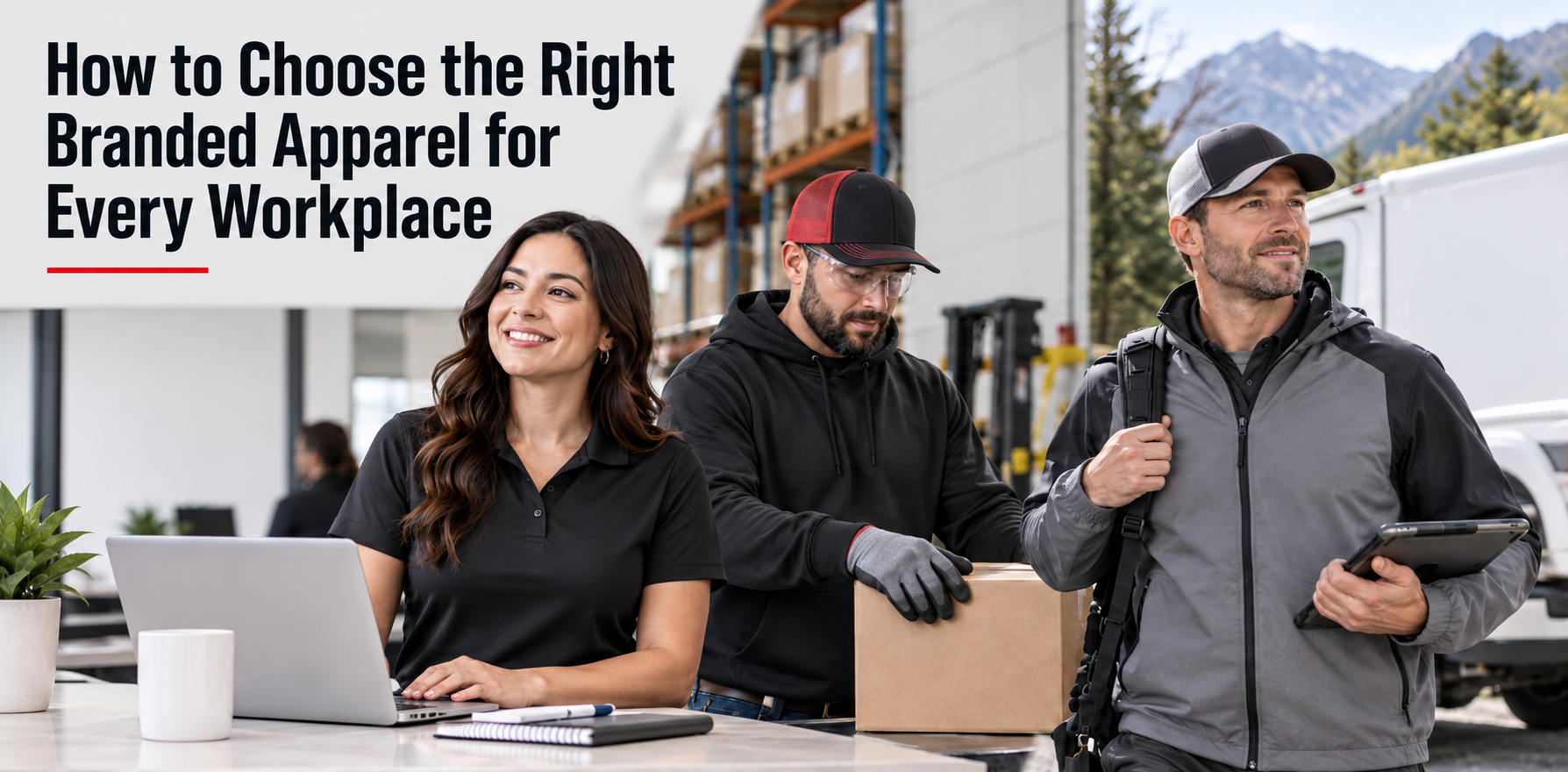
Branded apparel should do more than display your company logo.
It should help employees feel comfortable, look professional, and perform their jobs without getting in the way. That is why the same shirt, jacket, or hat will not work equally well in every workplace.
An embroidered polo may be a great choice for an office or customer-facing team. A warehouse employee may need something more durable and breathable. An outdoor crew may require moisture management, sun protection, weather resistance, or high visibility.
Choosing the right apparel starts with understanding where it will be worn, what employees do during the day, and how often the garment will be used.
Here is how to build a branded apparel program that works in the real world.
Start With the Job, Not the Garment
It is tempting to begin by browsing shirts, jackets, and hats. Before choosing a product, however, take a closer look at the employee’s workday.
Ask questions such as:
- Do employees work indoors, outdoors, or in both environments?
- Are they sitting, standing, lifting, bending, or moving throughout the day?
- Do they interact directly with customers?
- Are they exposed to heat, cold, rain, sunlight, dirt, or moisture?
- Will they work near equipment or machinery?
- Does the workplace have specific safety requirements?
- How frequently will the apparel need to be washed?
- Will employees wear it every day or only for meetings and events?
- Does the garment need to accommodate tools, badges, or equipment?
These answers will help you evaluate fabrics, features, fits, decoration methods, and garment styles more effectively.
A Quick Branded Apparel Selection Guide
If you are ordering branded apparel for the first time, use these priorities as a starting point.
Office and Professional Teams
Prioritize:
- Professional appearance
- Comfort
- Wrinkle resistance
- Easy layering
- Consistent fit and color
Consider:
- Polos
- Button-down shirts
- Quarter-zips
- Cardigans
- Sweaters
- Lightweight jackets
- Premium T-shirts for casual offices
Decoration:
Subtle embroidery often creates a polished appearance on polos, button-downs, sweaters, and outerwear.
Warehouses and Production Facilities
Prioritize:
- Durability
- Range of movement
- Breathability
- Easy care
- Resistance to frequent washing
Consider:
- Durable work shirts
- Performance T-shirts
- Moisture-wicking polos
- Long-sleeve shirts
- Work jackets
- Safety vests
- Stain-resistant apparel
Decoration:
Screen printing may work well for larger T-shirt orders. Embroidery can be appropriate for durable work shirts and jackets. Heat transfer may be useful for employee names, departments, or safety-related identification.
Outdoor and Field Crews
Prioritize:
- Weather protection
- Moisture management
- Sun protection
- Layering
- Visibility
- Freedom of movement
Consider:
- Performance T-shirts
- Long-sleeve sun shirts
- Hoodies and sweatshirts
- Rain jackets
- Insulated outerwear
- High-visibility shirts and vests
- Caps and beanies
Decoration:
The right method depends on the garment material. Performance fabrics, waterproof coatings, and lightweight outerwear may require specialized decoration to prevent damage or affect performance.
Hospitality, Retail, and Customer-Facing Teams
Prioritize:
- A polished, consistent appearance
- Breathability
- Stain resistance
- Easy care
- Comfort during long shifts
Consider:
- Polos
- Button-down shirts
- Aprons
- Vests
- Performance shirts
- Lightweight jackets
- Caps or visors
Decoration:
Embroidery can create a refined look, while heat-applied graphics may work well for bold branding, departments, names, or special-event uniforms.
Healthcare, Fitness, and Wellness Teams
Prioritize:
- Stretch
- Breathability
- Easy movement
- Frequent washing
- Professional appearance
- Compatibility with badges and equipment
Consider:
- Scrubs
- Stretch jackets
- Performance polos
- Athletic shirts
- Quarter-zips
- Warm-up jackets
- Lightweight layers
Decoration:
Keep logos visible but appropriately sized. Placement should not interfere with pockets, name badges, medical equipment, or movement.
Remote and Hybrid Employees
Prioritize:
- Comfort
- Versatility
- Video-call appearance
- Easy sizing and distribution
- Products employees will wear outside work
Consider:
- Premium T-shirts
- Hoodies
- Sweatshirts
- Quarter-zips
- Lightweight jackets
- Hats
- Comfortable lifestyle apparel
Decoration:
Screen printing works well for graphic T-shirts and hoodies. Embroidery can elevate quarter-zips, hats, and jackets.
A company store can make it easier for remote employees to select their sizes and preferred styles while keeping the program consistent.
Choose Fabrics That Solve Real Problems
Fabric affects how apparel feels, performs, washes, and holds its shape.
Cotton
Cotton is soft, familiar, and comfortable. It can be a good choice for casual workplaces, employee events, and everyday T-shirts.
However, cotton may retain moisture and can shrink if it is not washed correctly.
Polyester and Performance Fabrics
Performance fabrics are often selected for active, outdoor, warehouse, fitness, and hospitality environments.
Depending on the garment, they may offer:
- Moisture-wicking properties
- Faster drying
- Wrinkle resistance
- Stretch
- Shape retention
- Lightweight comfort
Performance fabrics can respond differently to heat and decoration, so the decoration method should be selected carefully.
Cotton-Polyester Blends
Blended fabrics can provide a balance of softness, durability, and shape retention. They are versatile enough for many offices, events, field teams, and everyday employee programs.
Specialty Workwear Fabrics
Certain environments may benefit from features such as:
- Stain resistance
- Water resistance
- Insulation
- UV protection
- Odor control
- High visibility
- Abrasion resistance
Avoid paying for features employees do not need. Focus on the ones that address a real workplace condition.
Think in Layers for Changing Conditions
Employees who move between indoor and outdoor environments may need more than one garment.
Instead of giving everyone one heavy jacket, consider a layering system that might include:
- A breathable base shirt
- A polo or lightweight mid-layer
- A sweatshirt or quarter-zip
- A weather-resistant outer layer
Layers give employees more flexibility as temperatures and working conditions change. They can also keep branding visible throughout the year.
A simple, coordinated collection is often more useful than a single garment expected to work in every season.
Make Safety Part of the Selection Process
Apparel should never interfere with workplace safety requirements.
Depending on the environment, considerations may include:
- High-visibility colors or reflective details
- Loose sleeves or oversized fits
- Drawstrings near machinery
- Garments that could catch on equipment
- Flammability requirements
- Weather exposure
- Required protective equipment
- Logo placement around safety markings
Promotional apparel is not automatically a substitute for certified protective workwear.
Before ordering garments for industrial, construction, transportation, electrical, or other regulated environments, confirm the organization’s safety requirements and any applicable standards.
Offer Fits and Sizes Employees Can Wear Confidently
One unisex garment may be convenient to order, but it may not provide the best fit for every employee.
Depending on your workforce, consider offering:
- Unisex styles
- Men’s and women’s companion styles
- Extended sizes
- Tall sizes
- Multiple approved garment options
Look for companion styles available in coordinated colors so the team can have different fits without looking inconsistent.
Provide manufacturer sizing charts and, when possible, sample garments. Employees should select sizes based on the specific garment—not simply order the size they normally wear in another brand.
A well-decorated shirt still provides little value if it stays in a closet because it does not fit comfortably.
Match the Decoration to the Apparel
The garment and decoration method should be planned together.
Screen Printing
Screen printing is often a strong option for:
- T-shirts
- Sweatshirts
- Hoodies
- Larger quantities
- Bold designs
- Front or back graphics
The number of colors and decoration locations can affect pricing.
Embroidery
Embroidery often works well for:
- Polos
- Button-down shirts
- Jackets
- Hats
- Professional workwear
- Smaller left-chest logos
Detailed logos may need to be simplified so they remain clean and readable when stitched.
Heat Transfer
Heat-applied decoration may be useful for:
- Individual names
- Departments
- Numbers
- Full-color designs
- Smaller quantities
- Performance garments
- Detailed artwork
Some coated, waterproof, stretchy, or heat-sensitive fabrics require specific application methods. Always confirm that the decoration is suitable for the garment.
Keep Branding Consistent Without Giving Everyone the Same Shirt
Different jobs often require different apparel. That does not mean the finished program needs to look disconnected.
Consistency can come from maintaining approved:
- Garment colors
- Logo versions
- Decoration colors
- Logo sizes
- Placement standards
- Quality expectations
For example, office employees may wear embroidered polos while a field team wears performance shirts and jackets. The products are different, but consistent colors and logo treatments can make them feel like one collection.
Create a small group of approved products for each role instead of allowing departments to select unrelated items independently.
Consider Care and Replacement
Apparel that will be worn and washed frequently should be easy to maintain.
Before placing a large order, review:
- Washing instructions
- Shrinkage potential
- Wrinkle resistance
- Colorfastness
- Stain resistance
- Drying requirements
- Decoration care instructions
- Expected frequency of use
Employees may not follow complicated care instructions. If a garment requires special handling, decide whether it is realistic for the intended workplace.
Also consider how damaged, worn, or stained garments will be replaced. A repeatable apparel program should have a clear process for new hires, size changes, replacements, and reorders.
Test Before Placing a Large Order
Catalog photos cannot tell you everything about a garment.
Whenever possible, review a sample so you can evaluate:
- Fabric weight and texture
- Color
- Fit
- Stretch
- Comfort
- Construction
- Pocket placement
- Decoration area
- Overall quality
For uniforms or daily workwear, ask a small group of employees to test the apparel during a normal workday.
Their feedback may reveal that a shirt is too warm, a pocket is poorly positioned, a jacket restricts movement, or a fabric requires more care than expected.
A small test can prevent a much larger problem.
Plan How the Apparel Will Be Ordered and Distributed
The program is not finished when production ends.
Determine how employees will:
- Submit their sizes
- Choose between approved styles
- Receive their garments
- Request replacements
- Order apparel as new hires
- Exchange an incorrect size
- Access seasonal options
For smaller teams, a spreadsheet and one bulk delivery may be enough.
Larger, remote, or multi-location organizations may benefit from individual packaging, department sorting, drop-shipping, managed inventory, or an online company store.
Planning distribution early helps ensure those services are included in the quote and production schedule.
Your Branded Apparel Checklist
Before approving an apparel program, confirm that you understand:
- Who will wear the apparel
- Where it will be worn
- What employees do during the day
- Which workplace conditions affect comfort or safety
- How often the garments will be washed
- Which fits and sizes are needed
- Which performance features provide real value
- How the apparel will be decorated
- Whether the garment has been sampled or tested
- How orders, exchanges, and replacements will be managed
- How branding will remain consistent across different roles
Build an Apparel Program That Works for Your Team
The best branded apparel is not simply the product that looks best in a catalog.
It is apparel that fits the employee, supports the work being performed, holds up to regular use, and represents the organization professionally.
Start with the work environment. Identify the features employees genuinely need. Select appropriate fits and decoration methods, test the garments, and create a plan for distribution and future reorders.
Marked Promo can help you compare apparel options, evaluate samples, prepare your artwork, select the right decoration method, and build a consistent program for every part of your team.
Ready to choose branded apparel that works as hard as your employees do? Request a quote from Marked Promo today.