How to Choose the Right Branded Apparel for Different Work Environments
Branded apparel can help employees look professional, represent the company consistently, and feel connected to the organization.
However, the same apparel will not work equally well in every workplace.
A polo that is appropriate for an office may not provide enough durability for a warehouse. A heavy cotton T-shirt may be uncomfortable for an outdoor crew working in warm weather. A stylish jacket may look great but create practical challenges if employees need to move, bend, lift, or work around equipment.
Choosing the right branded apparel requires more than selecting a color and adding a logo. The clothing should match the environment, the employee’s responsibilities, the company’s brand, and the way the garment will be worn.
Here are some important factors to consider when choosing branded apparel for different work environments.
Start With the Employee’s Workday
Before selecting a garment, think about what employees actually do throughout the day.
Consider questions such as:
- Do employees work indoors or outdoors?
- Are they frequently moving, lifting, or bending?
- Will the apparel be worn in front of customers?
- Does the environment become hot, cold, wet, or dirty?
- Are employees working around machinery or equipment?
- How often will the garment need to be washed?
- Will employees wear it every day or only for special events?
Understanding the workday helps narrow down the materials, fits, styles, and decoration methods that will perform best.
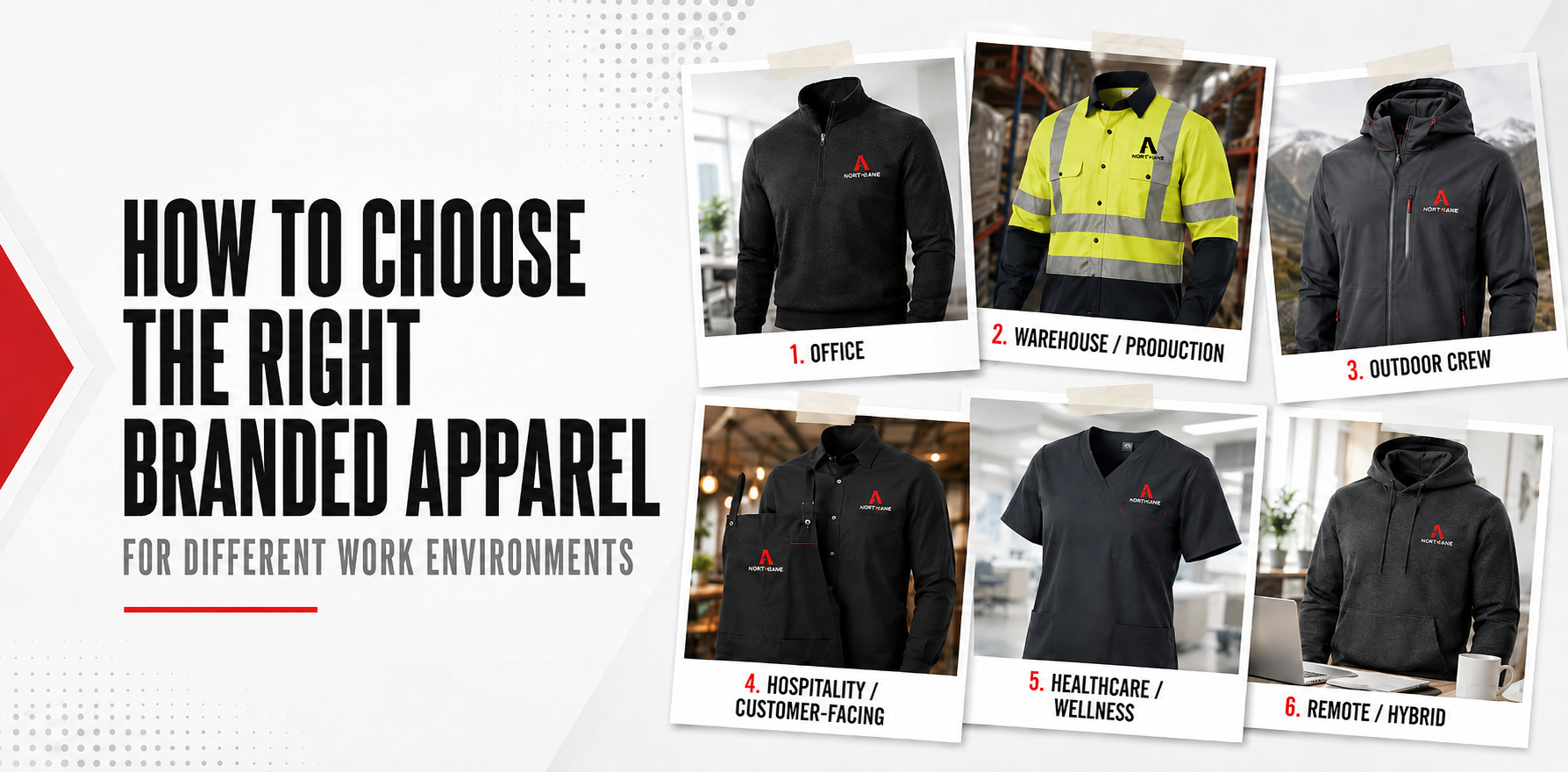
Branded Apparel for Office Environments
Office apparel should feel professional while remaining comfortable enough for employees to wear throughout the day.
Common options include:
- Polos
- Quarter-zips
- Cardigans
- Button-down shirts
- Lightweight jackets
- Sweaters
- Premium T-shirts for casual workplaces
The right choice will depend on the company’s dress code and culture.
A law office or financial firm may prefer embroidered button-down shirts or polished quarter-zips. A creative agency or technology company may choose premium T-shirts, hoodies, or casual jackets.
Comfort and fit are especially important. Employees are more likely to wear apparel regularly when it fits well and feels natural within the existing dress code.
Branded Apparel for Warehouses and Production Facilities
Employees working in warehouses, manufacturing facilities, or production environments typically need clothing that can withstand frequent movement, repeated washing, and daily wear.
Good options may include:
- Durable work shirts
- Moisture-wicking T-shirts
- Performance polos
- Work jackets
- Safety vests
- Long-sleeve shirts
- Apparel with stain-resistant properties
The fabric should be strong enough to handle the work environment without feeling overly restrictive.
Garments should also be selected with safety in mind. Loose sleeves, drawstrings, hanging accessories, or bulky decorations may not be appropriate around certain equipment.
Always review the workplace’s safety requirements before choosing apparel.
Branded Apparel for Outdoor Crews
Outdoor employees may experience changing temperatures, sunlight, wind, rain, and physical activity throughout the workday.
Layering is often the most practical approach.
An outdoor apparel program might include:
- Lightweight moisture-wicking shirts
- Long-sleeve sun-protection shirts
- Hoodies or sweatshirts
- Insulated jackets
- Rain jackets
- Hats or beanies
- High-visibility apparel
In warmer conditions, breathable performance fabrics can help employees remain more comfortable.
During colder months, employees may need multiple branded layers rather than one heavy garment. A moisture-wicking base layer, sweatshirt, and outer jacket can provide more flexibility as conditions change.
Durability, weather resistance, and ease of movement should be prioritized.
Branded Apparel for Hospitality and Customer-Facing Teams
Hospitality employees often need apparel that looks polished while remaining comfortable during long shifts.
Restaurants, hotels, event venues, retail stores, and service businesses may consider:
- Polos
- Button-down shirts
- Aprons
- Vests
- Lightweight jackets
- Performance shirts
- Caps or visors
The apparel should reflect the brand experience customers expect.
A luxury hotel may choose subtle embroidery and neutral colors, while a casual restaurant may prefer brighter colors and more relaxed styles.
Stain resistance, breathability, and easy care are especially valuable for employees who work around food, beverages, or high-traffic areas.
Branded Apparel for Healthcare and Wellness Settings
Healthcare, fitness, salon, spa, and wellness employees need apparel that is comfortable, professional, and appropriate for frequent movement.
Options may include:
- Scrubs
- Performance polos
- Stretch jackets
- Quarter-zips
- Lightweight T-shirts
- Athletic apparel
- Warm-up jackets
Fabrics with stretch and moisture-management properties can help employees remain comfortable throughout long shifts.
Decoration placement should also be considered carefully. A logo should remain visible without interfering with pockets, name badges, medical equipment, or movement.
Branded Apparel for Remote and Hybrid Employees
Remote and hybrid employees may not need traditional uniforms, but branded apparel can still help them feel connected to the organization.
Consider items employees can comfortably wear during video calls, company meetings, travel, and everyday activities.
Popular options include:
- Premium T-shirts
- Sweatshirts
- Hoodies
- Quarter-zips
- Lightweight jackets
- Hats
- Comfortable loungewear
Because remote employees may be located throughout the country, sizing, packaging, and individual shipping should be considered during the planning process.
A company store can also make it easier for employees to select their preferred size and style.
Consider Fabric and Performance Features
Fabric can significantly affect how apparel looks and performs.
Cotton is soft and familiar, but it may retain moisture and shrink if it is not cared for properly.
Polyester and performance blends often provide moisture-wicking, quick-drying, and wrinkle-resistant benefits.
Cotton-polyester blends can offer a balance of softness, durability, and shape retention.
Depending on the work environment, useful features may include:
- Moisture management
- Stretch
- Wrinkle resistance
- Stain resistance
- UV protection
- Water resistance
- Odor control
- Insulation
- High visibility
The most effective features are the ones that solve a real problem for employees.
Choose an Appropriate Fit
Providing one unisex garment may seem simple, but it may not offer the best experience for every employee.
Whenever possible, consider offering:
- Unisex fits
- Men’s fits
- Women’s fits
- Extended sizes
- Tall sizes
- Multiple garment styles
Employees are more likely to wear branded apparel when they feel comfortable and confident in it.
Providing a size chart or samples before ordering can also help reduce sizing issues.
Match the Decoration Method to the Garment
The apparel and decoration method should be selected together.
Screen printing often works well for cotton and blended T-shirts, especially for larger orders.
Embroidery creates a polished appearance on polos, jackets, hats, and professional workwear.
Heat press can be useful for personalization, detailed designs, employee names, departments, and smaller quantities.
Certain performance materials, coated fabrics, and lightweight garments may require specialized decoration techniques.
Choosing the wrong method could affect the appearance, comfort, or durability of the finished apparel.
Keep Your Brand Consistent
Even when employees need different types of apparel, the overall program should still feel cohesive.
Logo placement, colors, decoration size, and garment quality should remain consistent across departments.
For example, office employees may wear embroidered polos while warehouse employees wear screen-printed performance shirts. The garments are different, but the branding can still feel unified.
Clear brand standards help prevent employees, departments, and locations from ordering items that look disconnected from one another.
Test Apparel Before Placing a Large Order
Whenever possible, review samples before committing to a large apparel order.
A sample can help you evaluate:
- Fabric quality
- Fit
- Color
- Weight
- Comfort
- Logo placement
- Decoration quality
- Overall appearance
Testing the apparel in the actual work environment can also reveal practical issues that may not be obvious from a catalog image.
A small amount of additional planning can prevent costly sizing, comfort, or performance problems later.
Build an Apparel Program Employees Will Actually Use
The best branded apparel is not simply attractive. It is comfortable, practical, appropriate for the work environment, and aligned with the company’s brand.
When employees enjoy wearing the apparel, it can help create a consistent professional appearance while increasing brand visibility and team pride.
At Marked Promo, we help organizations select branded apparel based on their work environment, employees, budget, branding, and day-to-day needs.
Ready to build an apparel program that works for your team? Contact us for product recommendations and request a quote today.