How to Choose Branded Apparel Your Team Will Actually Wear
You can order the nicest-looking company shirts in the catalog, add your logo, and hand them out to your entire team. But if the fit is uncomfortable, the material feels wrong, or the style isn’t something employees would choose for themselves, those shirts may never make it out of the closet.
Great branded apparel should do more than display your logo. It should be something people feel good wearing—at work, at company events, and even on their own time.
So how do you choose company apparel your employees will actually reach for? It starts with thinking beyond the logo and focusing on the people wearing it.
1. Start With How Your Team Will Wear It
Before choosing a T-shirt, polo, hoodie, or jacket, think about when and where employees will use it. Apparel for a corporate office serves a different purpose than clothing for a construction crew, restaurant staff, or weekend volunteer event.
For everyday office wear, consider polos, soft quarter-zips, and lightweight layers. For active or outdoor teams, prioritize mobility, durability, breathability, and weather-appropriate fabrics. For casual workplace events or employee appreciation gifts, a comfortable tee or hoodie can be a great fit.
The best starting question isn’t “What should we put our logo on?” It’s “What would our team be excited to wear?”
2. Pay Attention to Fabric and Comfort
A garment can look great in a product photo and still feel completely different when worn. Fabric weight, texture, stretch, and breathability all affect how often someone reaches for an item.
Soft cotton and cotton-blend T-shirts are popular for casual everyday wear. Performance fabrics can work well for warmer environments and active jobs, especially when moisture management matters. Fleece and midweight layers can provide comfort for cooler spaces or outdoor use.
There’s no single perfect fabric for every team. Think about the season, work environment, care requirements, and how the apparel needs to perform throughout the day. Whenever possible, review samples before committing to a large order.
3. Choose Styles That Feel Current Without Being Too Trendy
Employees are more likely to wear branded apparel when the style feels like something they’d buy for themselves. That doesn’t mean chasing every trend. It means choosing modern, versatile pieces that fit naturally into everyday wardrobes.
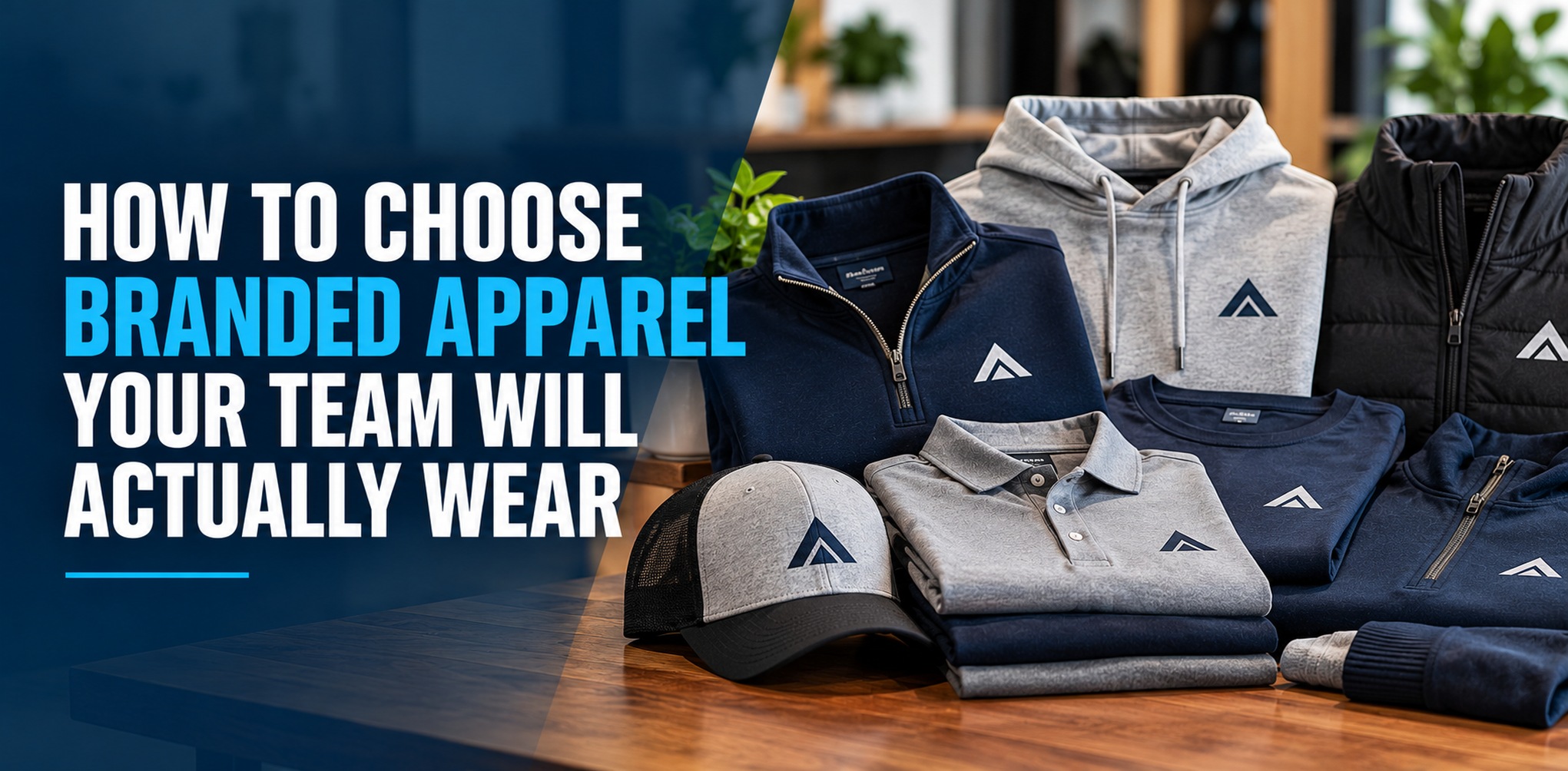
Clean crewneck T-shirts, comfortable hoodies, well-fitting polos, classic caps, and simple quarter-zips can all be strong choices. Neutral colors and understated details often make branded pieces easier to style with clothing people already own.
Consider your company culture, too. A casual creative team may prefer relaxed sweatshirts, while a client-facing team might need polished polos or outerwear. If the budget allows, offering employees a choice of two or three approved styles can increase the chance they’ll genuinely enjoy wearing the final product.
4. Make Fit and Sizing a Priority
Even the best fabric and design won’t help if the apparel doesn’t fit. Sizing can vary between brands and even between styles from the same manufacturer.
Avoid guessing quantities based on a generic size breakdown. Instead, collect employee sizes in advance, share the specific garment’s size chart, and account for different fit preferences. Some employees may prefer a relaxed unisex style; others may want a more tailored option.
For more substantial apparel orders, reviewing samples or setting up a simple try-on opportunity can help reduce sizing surprises. A little planning up front is better than ending up with boxes of unused shirts.
5. Keep the Branding Thoughtful
There’s a big difference between apparel that looks like a uniform and apparel people want to wear on weekends. Sometimes that difference comes down to how the logo is decorated and where it’s placed.
A small embroidered chest logo, subtle sleeve detail, or clean one-color print can make a piece feel polished without overwhelming it. Larger graphics can work well for event shirts, team celebrations, or a more casual company culture.
The right decoration method depends on the garment and artwork. Embroidery often looks especially sharp on polos, hats, fleece, and jackets. Screen printing and other print methods can be effective for T-shirts, sweatshirts, and graphic designs.
Keep logo size, contrast, placement, and fabric texture in mind. If a design has tiny lettering or intricate details, it may need adjustments for a clean finished result.
6. Offer Choices When It Makes Sense
Not everyone likes the same shirt, fit, or color. Giving employees a little flexibility can make branded apparel feel less like a mandatory giveaway and more like a thoughtful perk.
For example, you might offer a choice between a hoodie and a quarter-zip, or provide a few approved color options within your brand palette. You can also choose one consistent logo treatment across different garment styles to keep the overall look cohesive.
You don’t need dozens of options. A small, curated selection can create a more personal experience without making the ordering process overly complicated.
7. Balance Budget With Long-Term Value
Unit price matters, especially when you’re outfitting a large team. But the least expensive option isn’t always the best investment.
If a shirt shrinks unexpectedly, loses its shape, or feels uncomfortable, employees may stop wearing it after one or two uses. A slightly better-quality garment that becomes a favorite can deliver more lasting value.
Consider the total project budget, including garment cost, decoration, size-related price differences, shipping, and production timing. You may find that fewer high-quality pieces are more effective than a larger quantity of apparel no one wants to wear.
Branded Apparel Ideas by Team Type
Need a place to start? These combinations can help narrow down your options:
- Office and client-facing teams: embroidered polos, quarter-zips, soft-shell jackets, and classic button-downs.
- Field and outdoor crews: durable work shirts, weather-ready layers, practical hats, and high-visibility garments when required for the job.
- Retail and hospitality teams: comfortable polos, easy-care T-shirts, aprons, and lightweight layers.
- Remote and hybrid teams: premium hoodies, crewneck sweatshirts, and versatile casual apparel delivered as part of a welcome kit.
- Employee events and volunteer days: breathable T-shirts, matching caps, and seasonal layers that make teams easy to recognize.
These are starting points, not one-size-fits-all rules. Your team’s day-to-day needs should guide the final selection.
A Quick Checklist Before You Order Company Apparel
Before approving your next branded apparel order, ask yourself:
- Would our employees choose to wear this style?
- Does the fabric suit their work environment and the season?
- Have we checked sizing and fit across the team?
- Does the logo placement feel intentional and wearable?
- Should we offer more than one style or color?
- Have we reviewed a sample or product details?
- Do we have enough time for artwork approvals, production, and delivery?
Answering these questions early can help you choose apparel that makes employees feel considered—and helps your brand look its best.
Make Company Apparel People Are Proud to Wear
The most effective branded apparel doesn’t just look good in a product mockup. It fits well, feels comfortable, suits the people wearing it, and reflects your brand without overpowering the garment.
At Marked Promo, we help businesses choose branded T-shirts, polos, hoodies, jackets, hats, and more with the right balance of style, comfort, decoration, and budget. Whether you’re outfitting a new team, refreshing employee apparel, or planning a company event, we’ll help you find pieces your people will actually want to wear.
On-brand, on-time, every time.
Ready to upgrade your company apparel? Request a quote and let’s find the right fit for your team.